 477.96 p (
+1.16)
477.96 p (
+1.16) 


The rise of AI – friend or foe to graduates
8 May 2026
Artificial intelligence continues to dominate headlines, with particular attention on how it may shape graduate careers and whether a degree remains a valuable investment.
Some reports warn that AI could reduce the number of entry‑level roles available, while others suggest that graduates who can work confidently with AI may become more attractive to employers with new research from the Institute of Student Employers suggesting most employers believe the impact of AI on entry level roles would be ‘limited in scope’.
For students trying to make sense of this rapidly evolving picture, the debate can be unclear at times, and their perspectives are often missing from the conversation.
To bring that perspective into the debate, we spoke to students currently on industrial placements with Unite Group.
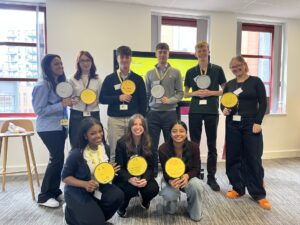
AI helps students work smarter, not replace thinking
Ava, a Commercial Industrial Placement student, has used AI regularly throughout her university studies.
“It helps to structure essays, summarise complex readings and generate ideas when starting assignments”. For Ava, AI works best as a supporting tool, helping to remove friction at early stages of work and creating more space to focus on higher-value thinking.
James, who is on placement in Risk and Assurance, echoes this view, describing how he uses AI when
“brainstorming ideas for projects and checking his spelling, punctuation and grammar.”
Across both experiences, AI is positioned as an efficiency tool rather than a replacement for core skills such as analysis, judgement or original thinking.
Adjusting to AI in the workplace
For several students, confidence in using AI increased once they entered the workplace.
Becca, currently focused on people-related work, said:
“It’s helped with coding, as this isn’t something I was used to doing.”
Georgia, who works in communications also described how her usage evolved during her placement:
“AI has helped me generate ideas for campaigns and check sentence structure.”
Meanwhile, Esther, part of the property team, values
“the clear and effective prompts it provides, and more reliable outputs.”
Alongside these benefits, students were clear about the need to apply judgement – reviewing outputs critically, refining prompts and recognising where AI’s limitations sit.
What this could mean for future careers
Looking ahead, Ava believes graduates who engage with new technologies may stand out in a competitive job market:
“Individuals who learn to work alongside AI will have a strong advantage and this could provide an opportunity in itself.”
However, students were conscious that familiarity alone is unlikely to be enough. Knowing when and how to use AI, and when not to, was seen as increasingly important.
With her interest in HR, Becca also highlighted AI’s broader potential, describing it as a valuable tool for:
“creating and refining employee learning courses for businesses.”
Georgia offered a more cautious note when reflecting on AI’s limitations:
“AI’s potential can feel limitless, but storytelling is where it’s capabilities end.”
Bebe, who works in user experience, can see both sides of the debate:
“AI can make design work a lot more efficient by taking care of the repetitive tasks, leaving more time for creativity”.
At the same time, she acknowledges the uncertainty ahead:
“My future career is probably going to look very different from what I do now”.
Living with uncertainty
Overall, students do not see AI as an immediate threat to their employability.
Instead, they see it as a tool that is already reshaping how they learn and work – with wider implications still unfolding.
While optimism is evident, so too is uncertainty about how roles may evolve as AI capabilities continue to develop.