463.00 p (
+6.00)
463.00 p (
+6.00) 


Manchester’s growth story starts with its universities
25 September 2026
By Joe Lister, Chief Executive at Unite Students
Manchester’s success is closely tied to the strength of its universities. Over many decades, they have attracted talent, supported innovation, created jobs and shaped the city’s identity. That connection is visible across the city, particularly along Oxford Road, where university investment, improvements to public spaces and the growth of the knowledge economy have helped create one of the UK’s most important education and innovation regions.
The appeal is about more than the qualification; it is about independence, opportunity, community and the chance to build a career in a place with a strong and growing economy. Greater Manchester Universities’ 2026 report says 40% of graduates stay in Greater Manchester after their degree. It also highlights the role the city-region’s universities will play in training the workforce Greater Manchester needs, including thousands of nurses, doctors and teachers.
The wider economic and civic contribution is significant. Greater Manchester’s five universities contribute more than £4bn to the regional economy each year, educate more than 125k students and employ more than 20k people. They also widen access and support students who may not otherwise see university as being for them, including first-in-family, care-experienced and estranged students. The Unite Foundation is part of that wider effort, supporting over 100 care-experienced and estranged students nationally each year with accommodation costs.
More students, more graduates and stronger universities create opportunities for cities, employers and communities. But growth also places pressure on housing, transport, services and local infrastructure. Student accommodation therefore needs to be planned as part of university and city growth, not treated as separate from it.
Success has to be planned for
Manchester has recognised this more clearly than many places. Manchester City Council’s 2023 purpose-built student accommodation (PBSA) report said a high-quality residential offer for students, in appropriate locations, is critical to the city’s ability to attract and retain students in a global market.
The 2026 Affordable PBSA review, prepared for the Council by Deloitte, cites a projected need of up to 11k new PBSA bedspaces by 2030 and an estimated current shortfall of around 16k beds. It also notes that Greater Manchester’s student population has grown by 22% over the last decade and that the current student-to-bed ratio points to unmet demand. These figures underline a simple point: if cities want the benefits of successful universities, they need to plan for the accommodation that supports them.
Delivered well, PBSA can meet student need while reducing pressure on rented homes also needed by families and local residents. But this is about more than housing supply. The quality of the student experience can influence who chooses to study in a city and who chooses to stay. Creating places where students can thrive helps cities retain talent and support long-term economic growth.
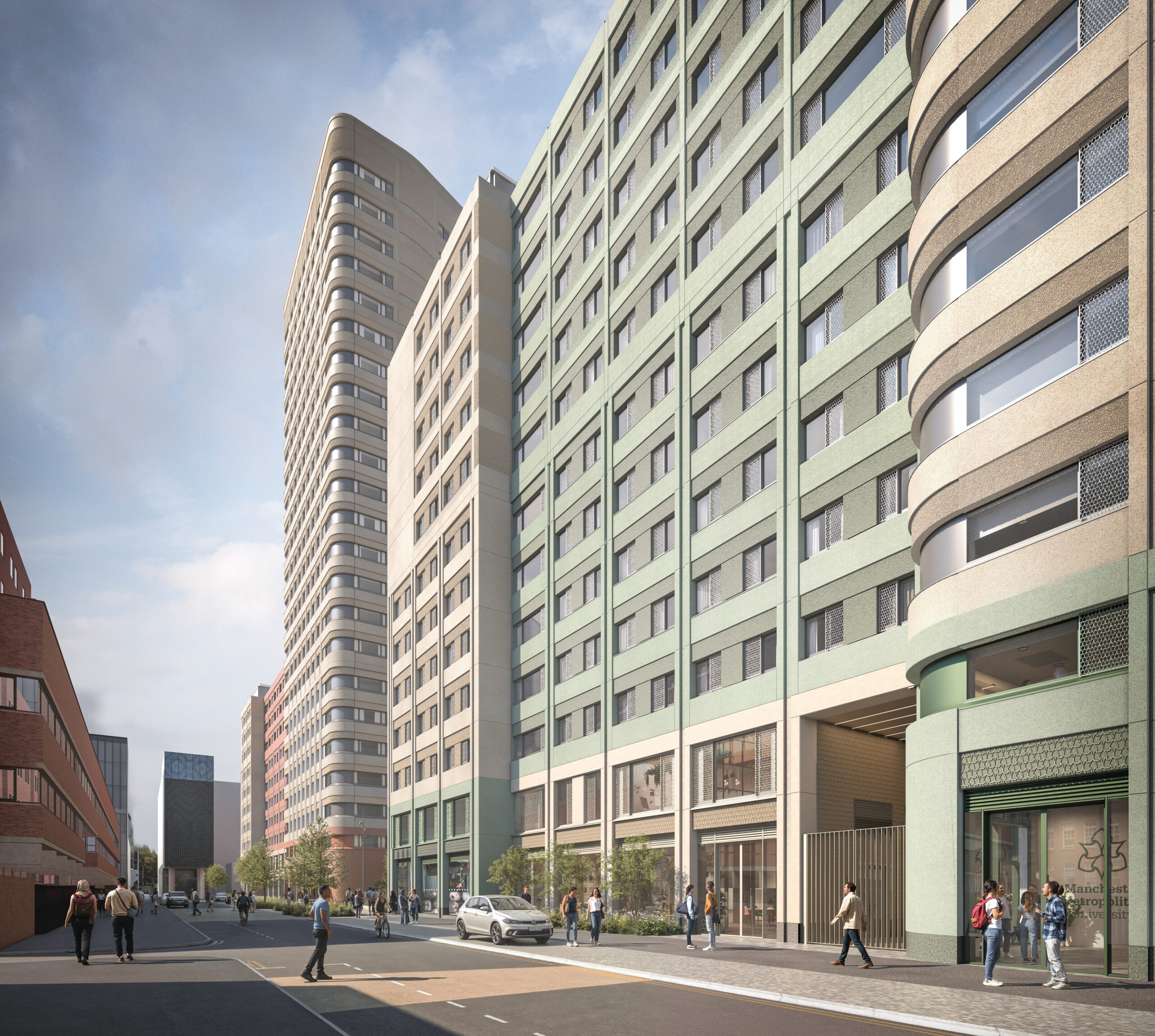
CGI of Unite Students and Manchester Metropolitan University’s Cambridge Halls development
Students still want the experience, but need more support
The overall experience matters because students are making careful choices. Our 2026 Applicant Index shows applicants still believe higher education is worth the investment and most still expect to live away from home. But it also shows the pressure they are under: financial confidence is at its lowest level in the history of the Index, 87% expect to work during term time, 36% have missed learning because of mental health and 26% feel lonely all or most of the time.
Students are also looking closely at the city around the university: whether they can afford to live there, whether they feel part of a community and what job opportunities are available during their studies and after graduation. For cities competing for talent, the student experience does not begin and end on campus. It is shaped by the wider environment, and the place students call home.
Good student accommodation is therefore about much more than providing a bed. It is about location, affordability, safety, support and a sense of belonging. When it is well located and professionally managed, it can help students feel part of the city and give them the foundations to succeed.
Partnership is how cities turn ambition into delivery
No city, university or provider can solve this alone. Universities are balancing major investment pressures, from teaching and research to decarbonisation, estates and student support. A recent report by Student First Group shows the scale of the challenge: more than 60% of university-owned accommodation falls below the standard students expect and up to 107k additional PBSA beds could be needed nationally by 2029/2030.
That is why partnership matters. Universities, councils and long-term partners each bring different strengths, from understanding student need and city priorities to unlocking investment and delivery capacity. Recent partnerships with Manchester Metropolitan University and The University of Manchester show how this can work in practice. Together, these partnerships will deliver around 5k beds and £1bn of investment, supporting students, universities and the regional economy.
What other university cities can learn from Manchester
For other university cities, Manchester offers a clear lesson: universities are powerful engines of local growth, but their impact is greatest when planned as part of a wider city strategy. That means aligning university expansion with housing, transport, skills and public space priorities. And bringing civic leaders, universities, investors and communities together around a shared plan.
Manchester shows what is possible when growth is planned with purpose. With the right partnerships, university success can help create stronger cities, better opportunities for young people, more resilient local economies and thriving communities.

CGI of Unite Students and Manchester Metropolitan University’s Cambridge Halls development